THANK YOU FOR SUBSCRIBING

× 
Food and Beverage Tech Review Weekly Brief
Be first to read the latest tech news, Industry Leader's Insights, and CIO interviews of medium and large enterprises exclusively from Food and Beverage Tech Review
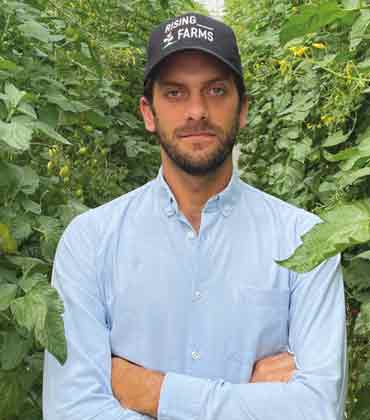
By Mauricio Ricaud, Founder & CEO, Rising Farms
What does Mexican agriculture need to truly exploit its...

By Luis Rodrigo M., Marketing Director, Grupo Herdez
Driving Growth and Innovation in a Competitive F&B Market

By Francisco Rovira, Head Supply Chain / NCE Champion / NBE NiM Integration Lead Peru-Bolivia, Nestlé
Connecting the Dots: Harnessing Technology and Curiosity...
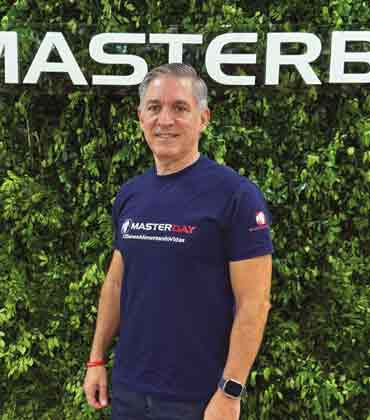
By Washington Franco, IT Director, Masterboi
The Path to Technological Leadership in Food Processing

Sustainable Livestock Farming: Technology And Innovation In Control Of The Chain
Tamara Lopes, Corporate Executive Sustainability Manager, Minerva Foods
 Tamara Lopes, Corporate Executive Sustainability Manager, Minerva Foods
For years, science has been contributing to the sustainable development of the agricultural sector, disseminating best practices supported by various technological methodologies and tools. In this evolution, industry experts increasingly emphasize the importance of discussing new production practices to implement innovative initiatives, leaving older and inefficient systems behind.
In this context, technology is a primary factor in structural change in the sector.
A significant number of farmers are already engaged in sustainable practices, such as in the Renove Program. This initiative uses technologies to measure the carbon balance on properties and encourage farmers to decarbonize their operations.
Access to these and other new solutions has shown to be an efficient way to aggregate knowledge, providing more control and traceability and offering business models and opportunities that eliminate potential negative impacts throughout the value chain – demonstrating how unity in the sector can contribute to engagement in an important cause.
Among the most notable innovation initiatives in livestock farming, we have geographic information systems in farming regions. In Brazil and other Latin American countries, we have developed pioneering mechanisms to monitor suppliers and map cattle purchase risks, focusing on combating illegal deforestation and complying with good environmental and social practices and laws.
“Technology is a primary factor in structural change in the sector.”
To deepen this analysis in other links in the value chain, specifically in indirect suppliers, we tested and integrated Visipec into Minerva Foods' internal systems. Visipec is a traceability tool that complements monitoring systems. It was developed by the National Wildlife Federation (NWF), in partnership with the Gibbs Land-Use and Environment Lab, at the University of Wisconsin-Madison (UW) and is currently managed by the NWF.
Understanding that efforts to improve traceability in the value chain must be collective, we took the next step in engaging farmers through the transfer of monitoring technology used by Minerva Foods. The SMGEO Prospec app, conceived in partnership with Niceplanet Geotecnologia, provides farmers with simple, intuitive access to data that large market players use to eliminate and mitigate socio-environmental risks at their suppliers.
The implementation of these technological tools strengthens the entire production chain, adding value to the Brazilian product, and making it even more competitive in the global market, ensuring that the end consumer has control over the origin and quality of the product acquired, as well as all the sustainability practices involved.
In summary, the data obtained through monitoring assist in maintaining the ecosystems that support agricultural production. So, investment in technology is part of a series of continuous efforts to ensure the perpetuation of business and food security for the planet of the future for upcoming generations, going far beyond a technological strategy based on process automation.

Read Also

Enhanced Precision Agriculture using Cloud Based AI
Enrique Leon, AI Enterprise Architect, American Sugar Refining Inc

How Cloud Computing Impacts Precision Agriculture Technology
Ruohan Liu, Senior Director, Global Operations, Agriculture Supply Innovation, PepsiCo

Building Durable Growth in Food Systems
Keira Lombardo, Chief Strategy Officer, Cal-Maine Foods Inc

From Roadmap to Reality: Scaling Technology with Purpose
Cameron Fiorini, Vice President of Digital & Technology, Foxtail Coffee CO

Why Restaurant Technology Should Be Designed For People, Not Just Performance
Brianne (Lane) Harvey, Director of Process + IT, Apicii Hospitality
Transforming the Beverage Alcohol Industry
Todd Morillo, Director of Sales Technology, Eagle Rock Distributing Company


Top
